01 · The hour as a container
The Hour as a Container
Sixty minutes of instruction was chosen as a measure of exposure, not a measure of learning — a distinction that has shaped every argument about the credit hour since 1906.

What the Carnegie Unit Actually Counted
When the Carnegie Foundation for the Advancement of Teaching ↗ codified the unit around 1906, it was solving a logistics problem, not a pedagogical one. Secondary schools and colleges needed a common currency for transfer — a way to say that a student arriving from one institution had covered comparable ground to a student trained at another. The unit that emerged measured clock time: one hour of classroom instruction per week across a standard academic term, repeated for credit. The foundation was not claiming that an hour of sitting produced an hour of learning. It was claiming that an hour of sitting could be counted.
The distinction is significant because it hardened into infrastructure. Accreditors adopted seat-time as a proxy for academic substance; federal financial aid regulations — particularly those governing Title IV eligibility — built their own definitions of the credit hour around contact time and expected out-of-class work. A 2010 federal rule defined a credit hour as one hour of classroom instruction plus two hours of out-of-class work per week ↗ over roughly fifteen weeks. The hour was now not just a count but a regulatory container with walls.

Why the Criticism Has Never Resolved
The objection to seat-time has been made in almost every decade since the unit was introduced. Its logic runs the same way each time: students learn at different rates, by different methods, in different contexts; a student who masters calculus in six weeks has learned the same calculus as one who took sixteen; the hour rewards attendance, not achievement. Critics from progressive educators in the early twentieth century to competency-based advocates in the twenty-first have made the case. The unit has survived them all, not because anyone successfully refuted the argument but because the unit performs a different function than its critics assume it performs.
What the hour actually does is administrative. It coordinates scheduling, governs faculty workload contracts, sets the denominator for tuition billing, satisfies accreditor documentation requirements and anchors federal compliance. An institution that abandoned it would need to replace all five functions simultaneously. That is the reason competency-based education programmes — which award credit on demonstrated mastery rather than elapsed time — required explicit regulatory carve-outs from the Department of Education before they could receive federal aid. The hour's grip is not ideological; it is structural.
How the definition shifted
- ~1906Carnegie Foundation codifies the unit as clock time in a classroom
- 2010Federal regulation defines the credit hour as one contact hour plus two hours out-of-class work per week per ~15 weeks
- 2012Department of Education opens direct-assessment carve-out for competency-based programmes, decoupling aid eligibility from seat-time in approved cases
The Container and Its Contents
The persistence of the seat-time measure does not mean the hour is empty. Contact time correlates, imperfectly but genuinely, with coverage: a course that meets more hours tends to expose students to more material, call on faculty for more direct instruction and generate more assessable work. The correlation is real enough that the hour works as a rough proxy most of the time, which is precisely what made it adoptable in 1906 and what keeps it defensible now.
The problem is at the margins and in novel delivery forms. When the Open University launched in 1969, it awarded degrees through correspondence, broadcast and residential schools — none of which mapped cleanly onto contact hours. Its accreditation required institutions and regulators to decide whether the hour was a proxy for something real (learning engagement, study time, academic exposure) or was the thing itself. American distance education prompted exactly the same question a generation later. In both cases, regulators ultimately preserved the hour by redefining it: not clock time in a room, but documented time on task, wherever that task occurred.
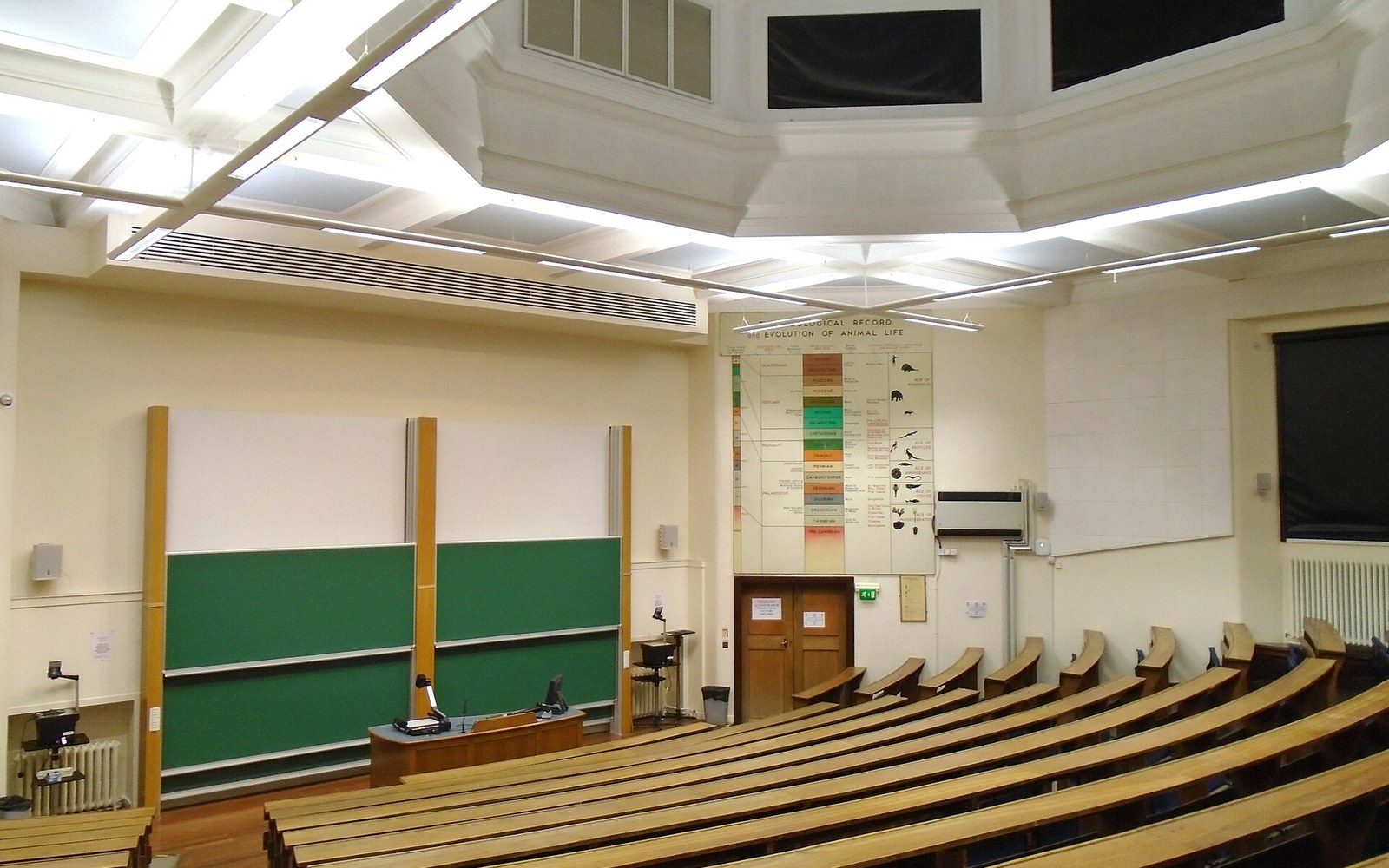
That shift is telling. It confirms that the hour is a container built to hold something — academic engagement — that neither its inventors nor its regulators have ever found a cleaner way to measure. The Carnegie unit was a practical settlement, not a theory of learning. The criticisms it attracts are criticisms of education measurement in general, projected onto the instrument that happened to become standard. The hour endures not because it is right but because replacing it requires agreeing on what it is a proxy for — and that agreement has never arrived.
The unit that emerged measured clock time: one hour of classroom instruction per week across a standard academic term, repeated for credit.
What the hour coordinates (and why it persists)
room and faculty timetabling built on the credit-hour increment
faculty contracts express teaching load in credit hours
per-credit pricing depends on the unit as denominator
standards require demonstrable contact or contact equivalence
Title IV eligibility tied to the regulatory credit-hour definition